Black Rebel Motorcycle Club – Wrong Creatures

You would think that there are certain rules you have to follow if you’re going to name your band “Black Rebel Motorcycle Club.” These four words, much like “Wolf Trident Eclipse” in yesterday’s album, seem to evoke something very particular—here I imagine thick beards, loud engines, and an endless highway. What happens instead is comparatively… tame. This music comes as more of a moan than a growl, plagued throughout by the passivity of understatement. It’s not bad music, it’s actually well-played alternative rock. But because motorcycle culture is rife with stereotypes of AC/DC and Judas Priest, this band’s music inevitably pales by comparison for its soft corners.

Maybe this is the music that motorcyclists dream to… Full of decadent reverb, luscious hooks, and just enough attitude to get through the night. I’ll never know, though–I don’t ride a motorcycle.

Watain – TRIDENT WOLF ECLIPSE

Trident. Wolf. Eclipse. What comes to your mind when you think of these three words? I figure the album art comes pretty close to whatever that may be, and so does the music. Indeed, frontman Erik Danielsson cites these three words as the three main concepts that fuel the band’s creative output. I have to say that’s quite a unique combination of influences.

It never ceases to amaze me how thrash bands continue to innovate by bashing the same few chords over and over again. In this case, Watain even takes a conservative approach to doing so, using conventional harmonies and instrumentation. If you’re looking for innovation here, then, one can only point to their relentless energy. At points it’s as aggresive and violent as grindcore, but somehow they are able to maintain these jams for several minutes at a time. Amazingly, the music carries on for so long at such an intense dynamic that it can seem both chaotic and contemplative at the same time.

Weedpecker – III

Stoner rock is a fun genre of music, for more than just the drug references. It seems to occupy a peculiar harmonic space that toes the line of many other genres, all the while maintaining its unique identity. Weedpecker is one of the best at this—they can sound like Soundgarden, Pink Floyd, Tool, and King Crimson, sometimes all in the same song. Unfortunately, I think that many people ironically treat stoner rock they way they do Christian rock, with a stubborn derision owing more to a dislike of the underlying principles than to the music itself. Those people are missing out, though, on an epic musical ride, contained here in five monumental songs of equal merit.

On top of all of the rock influences you can list here, there are also distinctive folk elements. Where does this come from? Modes! “Liquid Sky” and “From Mercury to Mars” contain the Dorian mode, which is sort of a minor-major mix, and “Molecule” is in Mixolydian, more of major-minor mix. Both of these modes are common in rock music, and offer a soft reprieve to the hard blues scale seen in more traditional rock music.

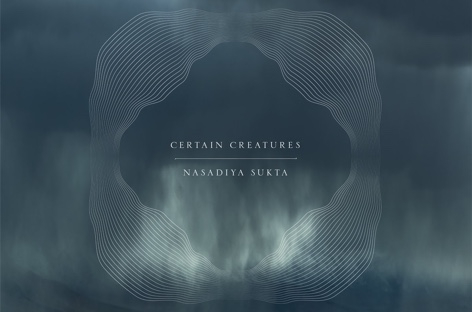
Certain Creatures – Nasadiya Sukta

I find it incredibly difficult to describe ambient music. It seems so understated to me as to offer as little musical information as possible, and I’m more often left with vague feelings than precise thoughts. Luckily, the Certain Creatures themselves (or himself, Oliver Chapoy) offers some context to the music on his bandcamp site. He describes the album as “a study in timelessness — crystalline, heartfelt ambient music designed to push light through shadow.” Aha, now it all makes sense!

Even the creator of this music seems limited to ambivalent feelings as he attempts characterize the music in words. This is because the music is very inexpressive for the most part, leaving much of the work to the listener to follow along on the listening journey. I think this is why discussion of ambient music is often so fantastical (Chapoy calls it “music for space travelers”). It does offer its moments, but they seem to blend into one another in a way that can’t be traced. Even the tracks lack much distinction from one another, as each new moment seems to swell out of what came before it. It’s an altogether different listening experience, for a very special kind of listening journey uninterrupted with the normal distractions of contemporary life. I do like it, but often find I just don’t have the time for it.

Cupcakke – Ephorize

Cupcakke is one of the funniest rapper names I’ve ever heard. That aside, she’s a strong rapper out of Chicago with all the trimmings of trap music, with a refreshing EDM twist. Duck Duck Goose is actually a great trap house cut, but you would never know by listening. You’re too focused on the lyrics, which are just as pornographic as her name suggests. I’m not even interested in quoting some of them here, because my choice of any of the raunchy rhymes contained here might betray some dark fetish of mine, and we’re not here to talk about that. You might call her explicit lyrics a distraction from the music, or even tasteless filler by hip-hop lyrical standards, but how far would you get with that argument? Hip-hop has been about rebellion ever since its inception in the ’70s, and in today’s pop rap climate it’s easy to forget about that. Everything about Cupcakke’s music is in your face, including the things she chooses to rap about.

The entire album isn’t devoted to pure sexuality. In fact, she claims that she wants to make use of her time on the microphone to make a positive difference in the world. She makes this claim in the very first track (“2 Minutes,” curiously clocking in at 3:13), and supports it in the form of LGBT advocacy in “Crayons.” Aside from these two tracks, though, she seems to be content letting everyone know how much wild sex she has. This seems to fly against feminist ideals, but does it actually? As sexual as Cupcakke is, she is also incredibly powerful with her delivery and presence. Perhaps this is actually the female hip-hop icon we need.

Modular Phaze – Isolated from Perception EP

Remember that lame space nightclub we visited last night? Well, now we’ve gone underground, where everybody knows the real club is. Oh, you didn’t know that space had an underground? Well, maybe this club isn’t for you, then.

I’m always curious at the reasons why we don’t attach to certain kinds of music. We all have our own preferences, and it usually boils down to familiarity. When we come across music that is strange and new, we can react in myriad ways. When egos flare high, we tend to dismiss unfamiliar music as inferior, due to its inability to stimulate us on a sophisticated level. Other times, however, our unfamiliarity is met with a certain reverence—or at least respect—for what we trust is surely more valuable than what meets the ear. People can experience both of these reactions when listening to music, and sometimes they’re hard to distinguish—look at the viral success of artists with “ironic” fanbases like Justin Bieber or Souljaboy Tell’em.

What does any of that have to do with this music? At first I didn’t respond well to this album, but realizing that I was only unfamiliar with the genre, I gave it the extra effort of a few more plays. For some reason club culture in and of itself carries a certain value, enough to make you want to enjoy the music just to fit in to that crowd. Which brings us back to the underground space club, a place so cool that it transcends conventional science regarding cosmic real estate. If you don’t get it, then you just don’t belong here. The planetarium is waiting for you upstairs, you nerd.

EDD-989 – Journey to the Core of the Galaxy

Picture yourself in elementary school, on a school field trip to the local planetarium. Hear the faint ambience of “space sounds” as a half-sedated man does his very best to convince you just how insignificant you are in the grand scheme of things. Now imagine you’re at a nightclub, with those same sounds pounding a steady beat somewhere, but certainly not where you are. No, the beat is somewhere lightyears away from here, at an astronomical distance to the order of magnitude that exceeds even the number of atoms in your puny human brain. And yet its sounds still reach you, pulsating from billions of years ago. You know they say that if the history of Earth was a 24 hour clock, human existence would begin about a minute before midnight. The universe is at least three times as old. Don’t you realize how small your problems are now, kid? Now get on the bus, it’s time to go back to school!

Long story short, this kind of space music has to be some sort of memo from a place a long time ago, in a galaxy far away (totally punintentional). Without the images of stars and planets to display the sheer wonder and magnitude of space, though, the music takes on a more tame identity. Ambient music isn’t meant to command the listener’s full attention, anyway.

Caskey – Speak of the Devil

Now this is what I’m talking about! Trap’s been more in my wheelhouse lately, and I’m happy for a new release to come my way. Trap is what was missing in Shuta Sueyoshi’s album, and so I’m approaching this pretty fresh.

Meghan Trainor(‘s songwriter Kevin Kadish) once said “it’s all about that bass.” I couldn’t disagree more: you see, it’s all about that sub bass. This is what forms the backbone of Caskey’s album, powerful and overbearing to the point of distortion in the mix. All other sounds grow organically over this pounding foundation, creating a dank and murky texture as Caskey flows effortlessly over top.

This kind of production has been called “cloud rap,” a new form of hip-hop featuring heavy reverb, haphazard lyricism, and yet another new level of overpowering sub bass. For another example of this kind of music one need look no further than OFWGKTA. It’s surely a millennial thing, but what exactly does it represent? A rebellion against musical conventions, a statement about contemporary society, or is it just an entitled act of laziness? Whatever it is, I like it.

Shuta Sueyoshi – Jack In The Box

And now for something totally different! One of the advantages of having to listen to a new album every day is that you end up listening to music you otherwise would have never sought out. This has been especially true in the last four days, when the number of albums released in 2018 are slim so far. And so here I go to the other side of the world to listen through some good old J-Pop.

Shuta Sueyoshi might be better known as a member of AAA, but I’m not really sure how he’s known across the Pacific. What I do know is that this music sounds awfully familiar. Pop music, after all, is universal. If it weren’t for the language, some of these songs may just as well have been from Africa, Europe, or South America. What makes this kind of world pop distinctive, then, isn’t in some distinctive national sound, but rather a special combination of myriad cultural styles. Here there’s hard rock, electronic, Latin, and disco, often all at once. What’s missing, though, is hip-hop and trap (he does begin one rap verse, breaking down into song by the end of the verse).

Sueyoshi starts off at his strongest with “To.ri.ca.go,” a wild ride that sounds straight out of the opening credits to an anime show. In the chorus you can hear at least one distinctive trait of J-pop: a forward-driven harmonic progression. This is reminiscent of more classic popular music forms, whereas today’s pop music meanders between 2-4 chords over and over again. Classical music theorists call a forward-driven harmony the “teleological” approach, and this is largely what makes Classical music sound the way it does. Rather than chill in a cool safe place, teleological music is constantly propelling toward some indeterminate ending. This isn’t to knock either harmonic style, it just reveals a difference in priorities. Perhaps Japan’s teleological pop is informed by an older relationship with Western culture, or maybe it reflects a predilection for nostalgic or sentimental expression. How should I know? I’m only listening to this because there was nothing else this year.

Scallops Hotel – Sovereign Nose of Your Arrogant Face

a2154232932_10

Scallops Hotel is one of the many epithets of Rory Ferreira, an unapologetically progressive rapper from Milwaukee, Wisconsin. He also responds to Milo, which is the pseudonym he chose for hist last release, “Who Told You To Think?!!?!?!?!” In August 2017. This particular album, though, is supposed to be a sequel to an earlier album released in June, “over the carnage rose a voice prophetic.” Now that I’ve sufficiently confused you, let’s dig even deeper into the nature of this album.

This isn’t conscious rap, that music set out to make a difference in the world. Not necessarily, at least. This is abstract hip-hop, an entirely separate genre that champions to the musical quality of the flow. The focus is less on the meaning of the words, but the sounds themselves. This sort of harkens back to the abstract notions of “absolute music” in the 1800s, with its grandiose symphonies composed by the likes of Beethoven and Brahms with no other intention than to exhibit the beauty of the music itself.

But what does that have anything to do with this?

Consider the rhythm of his flow. There isn’t a moment where he doesn’t seem to be experimenting with a new cadence. Rory almost gives the impression that he isn’t even trying to match the beat, long past that pedestrian formality in an ongoing search for new flows. He even follows classical forms in songs like “Rank, Title, Pressures,” the first half of an entire verse forms a musical sentence structured around the words in the title. This isn’t anything too special, though—classical phrase forms exist everywhere in hip-hop. Rory… I mean Milo… I mean Scallops Hotel… just seems to be pushing it towards uncharted territory.

By far one of my favorite listening moments was hearing the cameo by JAW GEMS, my musical spirit animal and a band that more people need to know about.